In this guide
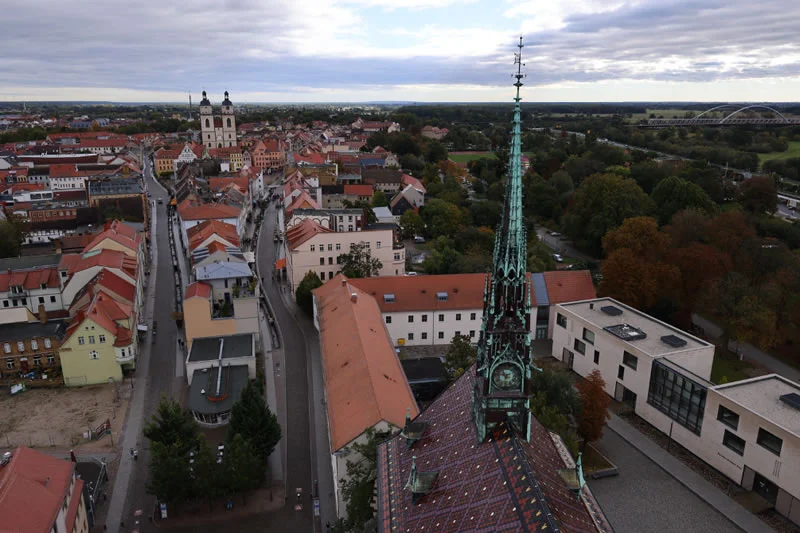
Just 70 kilometers south of Berlin, nestled along the serene banks of the River Elbe in the state of Saxony-Anhalt, lies one of the most culturally transformative towns in world history: Lutherstadt Wittenberg. It was here, on an overcast autumn morning on October 31, 1517, that an outspoken Augustinian monk named Martin Luther changed the trajectory of Western civilization by nailing his Ninety-Five Theses to the wooden portal of All Saints' Church.
Today, Wittenberg is a wonderfully preserved, pedestrian-friendly UNESCO World Heritage jewel of Renaissance architecture, cobblestone squares, picturesque courtyards, and world-class museums. In this 2026 day-trip guide, we explain how to reach Wittenberg from Berlin in under an hour, what monuments to visit, and where to enjoy authentic regional Saxon cuisine.
1. How to Get to Wittenberg from Berlin
Wittenberg is exceptionally easy to reach from central Berlin via Deutsche Bahn:
| Train Type | Travel Time | Frequency | Estimated Cost / Pass |
|---|---|---|---|
| ICE (InterCity Express) High-Speed | 35 - 42 minutes | Every 1–2 hours from Berlin Hbf or Südkreuz | 15 - 29 € (Book early on bahn.com for Super Sparpreis fares) |
| RE (Regional Express RE3 / RE4) | 1 hour 15 minutes | Hourly departures | Included in the Deutschlandticket or Quer-durchs-Land-Ticket |
Station Arrival: You will arrive at Lutherstadt Wittenberg Hauptbahnhof. From the station, it is a pleasant 10-minute walk through landscaped gardens along the historic moat directly into the pedestrian old town center.
2. Must-See Sights in Lutherstadt Wittenberg
1. The Castle Church (Schlosskirche) & The 95 Theses Doors
The epic focal point of the Protestant Reformation. Look first at the heavy Theses Doors (Thesentür) on the northern facade. The original wooden doors were destroyed by fire during the Seven Years' War in 1760; in 1858, Prussian King Friedrich Wilhelm IV commissioned monumental bronze doors inscribed with the full Latin text of all 95 Theses.
Inside the soaring Gothic church, walk up to the choir to view the simple bronze burial slabs where Martin Luther and his closest intellectual collaborator Philipp Melanchthon lie entombed directly beneath the pulpit where they once preached.
2. The Lutherhaus: The World's Largest Reformation Museum
Originally constructed in 1504 as an Augustinian monastery (Augusteum), this building served as Martin Luther’s residence after the monastery dissolved and he married former nun Katharina von Bora. Today, it houses the most important museum of Reformation history in existence:
- The Lutherstube: Luther’s original, miraculously preserved living and study room, featuring the wooden table where he held his famous «Table Talks» with students, his lecture chair, and original portraits painted by Lucas Cranach.
- Original 1534 Luther Bible: The historic printed Bible translated into colloquial German, which unified the German language and catalyzed the spread of literacy across Europe.
- Luther’s Monastic Robe & Pulpit: Authentic personal artifacts and handwritten theological correspondence.
3. St. Mary's City Church (Stadtkirche St. Marien)
The oldest building in Wittenberg and the mother church of the Protestant Reformation. Here, Martin Luther preached more than 2,000 sermons, held the world's first Protestant church service in the German language rather than Latin, and celebrated the first communion where both bread and wine were offered to the congregation.
Do not miss the world-renowned Reformation Altar painted in 1547 by Lucas Cranach the Elder, which brilliantly depicts Luther, Melanchthon, and Bugenhagen administering the sacraments to local townspeople.
4. The Cranach Courtyards (Cranachhöfe)
The bustling Renaissance workshop complex of master painter Lucas Cranach the Elder, who served as Wittenberg’s mayor, pharmacist, and court artist to the Electors of Saxony. Walk through the quiet stone courtyards (Markt 4 and Schlossstraße 1) to explore working historic printing presses, craft studios, and fragrant medieval herb gardens.
3. Where to Eat: Traditional Saxon Flavors
After a morning of historical exploration, head to the historic town square (Marktplatz) overlooked by the Renaissance Town Hall (Rathaus) and monumental bronze statues of Luther and Melanchthon:
- Brauhaus Wittenberg (Markt 6): Housed in a historic vaulted brewhouse. Enjoy freshly brewed unfiltered local craft beers (Wittenberger Kutscherbier) alongside roasted pork knuckle, beef goulash, and homemade potato dumplings.
- Café am Markt: The perfect terrace spot for afternoon German coffee and cake (Kaffee und Kuchen), serving traditional Saxon curd cake (Eierschecke).