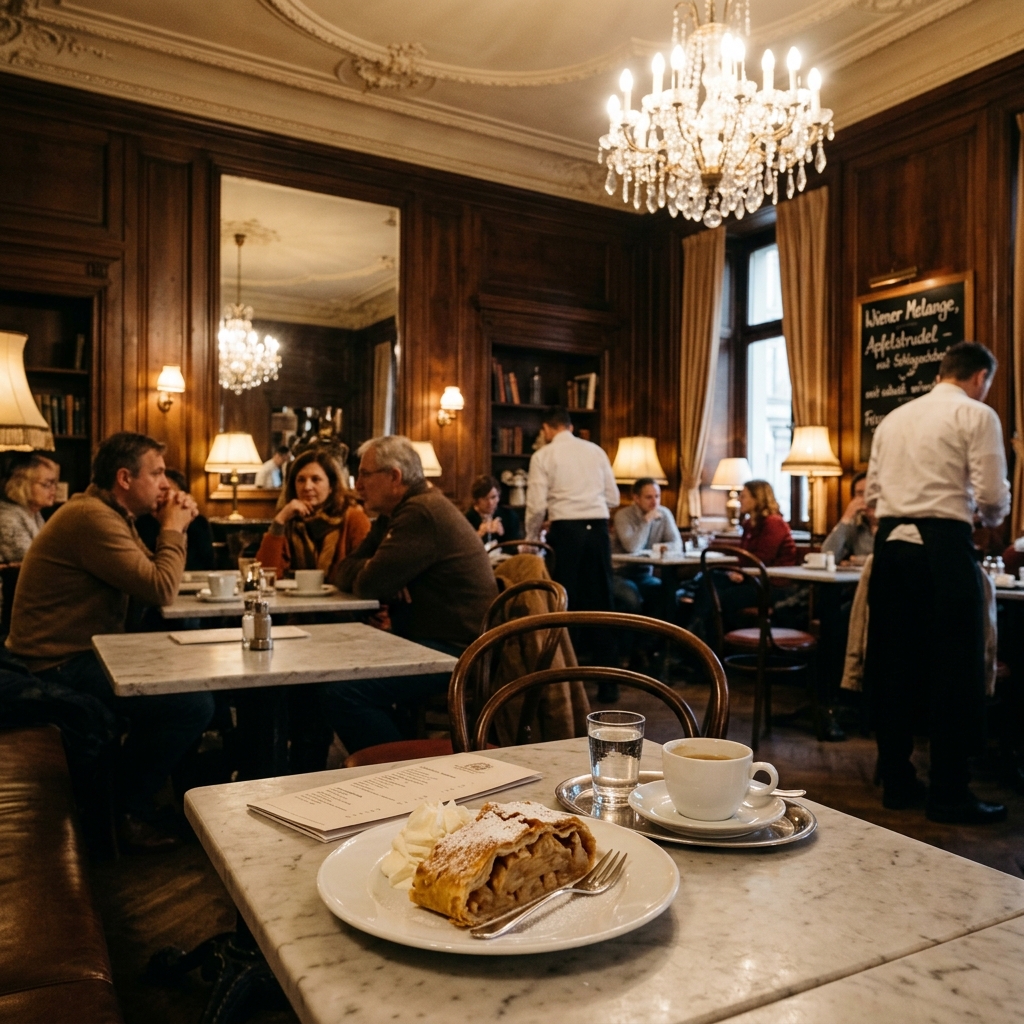
If you want to step out of Berlin’s fast-paced, industrial reality and immerse yourself in the elegant, nostalgic world of old-world European intellectualism, there is only one destination: Café Einstein Stammhaus. Located in a majestic, ivy-draped neo-Renaissance villa in Schöneberg, this legendary café operates in the style of a traditional Viennese coffee house. For decades, it has served as Berlin's unofficial living room for politicians, actors, writers, and artists.
In this detailed, 1000-word review, we explore the history of the Stammhaus, its unique atmosphere, the quality of its Austrian gastronomy, full contact details, and an interactive map.
The Villa: A History of Silent Film Stars and Espionage
The building housing Café Einstein has a history as rich and dramatic as Berlin itself. Built in 1878, the grand villa originally belonged to a secret society before being purchased in the 1920s by silent film star Henny Porten, one of Germany's first cinematic legends. Under her ownership, the villa became a glamorous salon for the creative elite of the Weimar Republic.
During the dark years of World War II, the villa was seized and reportedly used as an officers' club and casino. In 1978, Austrian entrepreneur Uschi Bach reopened the villa as Café Einstein, recreating a traditional Viennese coffee house to bring a touch of classic Habsburg elegance to a divided, walled West Berlin. Since then, its proximity to Berlin's government quarters has made it a hotspot for political negotiations, secret rendezvous, and intellectual debates.
The Vibe: Viennese Elegance and Literary Charm
Stepping through the heavy double doors of the Stammhaus feels like traveling back in time to fin-de-siècle Vienna. The interior features high ceilings, dark wood paneling, parquet floors, and round marble tables surrounded by classic Bentwood Thonet chairs. There are no flashing screens, neon lights, or modern design gimmicks. Instead, the walls are lined with vintage framed photographs of famous guests, and a large rack near the bar holds international daily newspapers mounted on traditional wooden holders.
The waiters, dressed in traditional black vests and white aprons, provide formal, professional service with a touch of classic Viennese wit. In the warmer spring and summer months, the café opens its beautiful, shaded rear garden. Sitting out here under the mature chestnut trees, surrounded by ivy-covered brick walls, you can easily forget that you are in the middle of a bustling metropolis.
The Menu: Masterclass in Austrian Gastronomy
True to its Viennese heritage, the menu at Café Einstein Stammhaus is dominated by classic Austrian specialty coffees and dishes. They do not serve modern flat whites or cold brews; instead, they serve traditional preparations, including:
- Melange: A classic Viennese favorite consisting of mild filter coffee topped with steamed milk and a dollop of milk foam.
- Einspänner: Strong black coffee served in a glass, topped with a thick head of cold whipped cream and dusted with cocoa powder.
- Großer Schwarzer: A double portion of strong, rich black coffee.
For dining, the absolute highlight is their legendary Apfelstrudel (apple strudel). Baked fresh daily, it features thin, flaky layers of pastry wrapping sweet, spiced apples, raisins, and roasted pine nuts. It is served warm and should always be ordered with a generous pour of house-made vanilla sauce. It is widely considered the best apple strudel in Berlin.
If you visit for lunch or dinner, they also serve an exceptional Wiener Schnitzel—tender veal pounded thin, coated in crispy, golden breadcrumbs, and served with a traditional Austrian warm potato-cucumber salad and wild cranberries.
---