In this guide
- U-Bahn vs. S-Bahn: What’s the Difference?
- Understanding the Berlin Zone System (A, B, and C)
- Ticket Types: Which One is for You?
- The Golden Rule: Validate Your Ticket!
- Must-Have Apps for Navigation
- Berlin Metro Etiquette: Rules of the Road
- Night Travel: The City That Never Sleeps (on Weekends)
- Iconic Stations to Watch Out For
- Safety Tips
- Conclusion
For many visitors, the first glimpse of Berlin's public transport system is a dizzying map of colorful lines crossing like a giant bowl of spaghetti. However, once you understand the rhythm of the city, you’ll realize that the U-Bahn and S-Bahn are the true lifeblood of the German capital. Efficient, frequent, and gritty in all the right ways, the Berlin transit network is one of the best in the world. But to use it without looking like a confused tourist, you need to know the insider rules.
In this guide, we will break down everything from the difference between the 'U' and the 'S', to the complex zone system, and the most important rule of all: ticket validation. By the time you finish reading, you’ll be navigating the tracks like a born-and-bred Berliner.
U-Bahn vs. S-Bahn: What’s the Difference?
In Berlin, you’ll see big blue 'S' signs and big yellow 'U' signs. While they are part of the same fare system and often share stations, they are managed by different entities and serve different purposes.
The U-Bahn (Untergrundbahn)
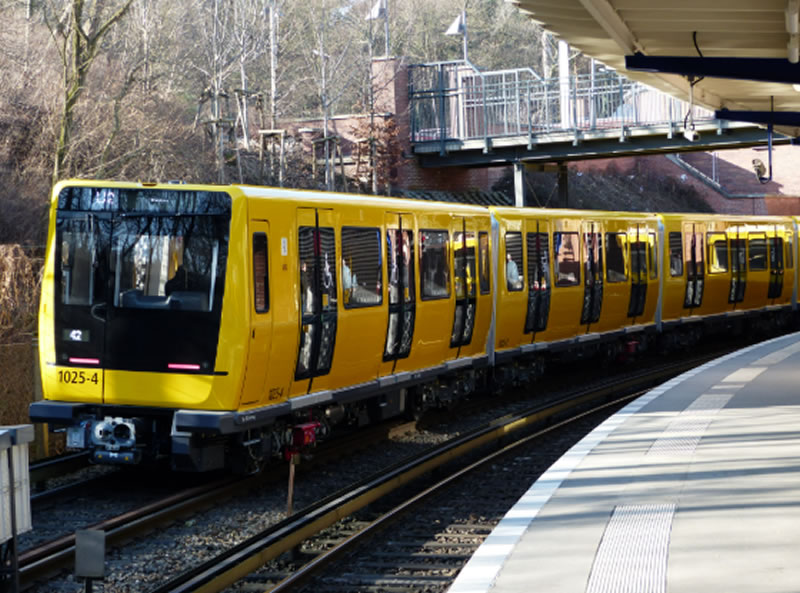
The U-Bahn is the underground metro. It primarily serves the inner city and is managed by the BVG. The trains are yellow and generally run every 5 to 10 minutes. The U-Bahn lines are numbered U1 through U9. The oldest lines (U1-U4) have narrower trains (Kleinprofil), while the newer lines have wider carriages.
The S-Bahn (Stadtschnellbahn)
The S-Bahn is the suburban express train, mostly running above ground on elevated tracks. It is managed by the Deutsche Bahn (DB). The S-Bahn is better for longer distances across the city or reaching the suburbs. Key routes include the Ringbahn (lines S41 and S42), which circles the entire inner city, and the Stadtbahn, which cuts through the center from East to West (Alexanderplatz to Zoologischer Garten).
Berlin WelcomeCard: Unlimited Transport
Reserva online con guía en español y cancelación gratuita.
Understanding the Berlin Zone System (A, B, and C)
Berlin is divided into three concentric fare zones. Knowing which one you are in is crucial for buying the correct ticket.
- Zone A: This is the inner city, everything inside the S-Bahn Ring (the dog-head shaped circle on the map). Most major tourist attractions are here.
- Zone B: This covers the area from the Ring to the city limits. This includes the Tegel area and many residential neighborhoods.
- Zone C: This is the surrounding area, including the city of Potsdam, the Sachsenhausen Memorial, and BER Airport.
Most travelers only need an AB ticket. However, if you are arriving at the airport or going to Potsdam, you MUST have an ABC ticket. Don't risk a fine by using an AB ticket in Zone C!
Ticket Types: Which One is for You?
The BVG offers a wide variety of tickets. Here are the most common ones for visitors:
- Short Trip (Kurzstrecke): Valid for 3 stops on the U-Bahn/S-Bahn or 6 stops on a Bus/Tram. No transfers allowed.
- Single Trip (Einzelfahrschein): Valid for 2 hours in one direction. You can change trains as much as you want, but you cannot use it to return to your starting point.
- Day Ticket (24-Stunden-Karte): Incredible value if you plan on making more than three trips. It is valid for a full 24 hours from the moment of validation.
- 7-Day Ticket (7-Tage-Karte): If you are staying for a week, this is the most economical and stress-free option.
- Group Day Ticket (Kleingruppen-Tageskarte): Valid for up to 5 people traveling together. It pays for itself if you are a group of 3 or more!
The Golden Rule: Validate Your Ticket!
In Berlin, tickets are not checked by turnstiles. You can walk right onto the platform. This leads many tourists to think they can ride for free or that the ticket is valid as soon as they buy it. This is a mistake.
You must find the small yellow or red boxes (Entwerter) on the platform or inside buses/trams and insert your ticket to get it stamped with the date and time. This is called 'validating.' If you are caught by a plain-clothes ticket inspector (and they are everywhere) with an unvalidated ticket, you will be fined €60 on the spot. No excuses about being a tourist will work.
Must-Have Apps for Navigation
While the paper maps at stations are great, these apps will make your life much easier:
- BVG Fahrinfo / BVG Tickets: The official app. You can buy tickets directly on your phone and see real-time departures.
- Google Maps: Surprisingly reliable for Berlin transit, including walking directions between platforms.
- Citymapper: Excellent for finding the 'best' carriage to stand in so you are closer to your exit or transfer stairs.
Guided Third Reich Tour
Reserva online con guía en español y cancelación gratuita.
Berlin Metro Etiquette: Rules of the Road
To avoid the 'Berliner Schnauze' (the famous Berlin bluntness/grumpiness), follow these social rules:
- Right Side on Escalators: Stand on the right, walk on the left. This is the most important social contract in Berlin. If you stand on the left, someone will eventually say 'Vorsicht!' or just huff loudly behind you.
- Let People Off First: Stand to the side of the doors and let passengers exit before you try to board.
- Bicycles: Bicycles are allowed on S-Bahn and U-Bahn trains (except during certain rush hour cars), but you must buy a separate bicycle ticket. Look for the bike symbols on the doors.
- Dogs: Dogs are allowed! Small dogs in carriers travel free; larger dogs need a reduced-fare ticket and must be leashed and muzzled.
- Eating and Drinking: While not strictly banned, it is considered impolite to eat smelly food. Alcohol is officially prohibited on many lines, though you will see locals with a 'Wegbier' (beer for the way) in the evenings.
Night Travel: The City That Never Sleeps (on Weekends)
During the week (Sunday night through Thursday night), the U-Bahn closes around 12:30 AM or 1:00 AM and is replaced by Night Buses (marked with an 'N'). These buses follow the U-Bahn routes but can be slower.
However, on Friday and Saturday nights, nearly all U-Bahn and S-Bahn lines run 24 hours a day, usually every 15 to 30 minutes. This is why Berlin is famous for its nightlife—you never have to worry about how to get home from the club!
Iconic Stations to Watch Out For
Some stations are destinations in themselves:
- Alexanderplatz: A massive hub where three U-Bahn lines, many S-Bahn lines, and dozens of trams meet under the TV Tower. It's chaotic but impressive.
- Kottbusser Tor (Kotti): The heart of Kreuzberg. It's gritty, vibrant, and perfectly summarizes the 'poor but sexy' vibe of Berlin.
- Hermannplatz: Known for its grand architecture and its direct connection to the massive Karstadt department store.
- Heidelberger Platz: Often cited as the most beautiful station in the city, with its cathedral-like vaulted ceilings.
Safety Tips
Berlin is generally a very safe city. However, like any major metro system, stay aware of your surroundings at night, especially at major hubs like Alexanderplatz or Hermannstraße. Pickpockets operate in crowded areas, so keep your bags closed and in front of you. If you ever feel unsafe, look for the SOS pillars on every platform.
Conclusion
The Berlin U-Bahn and S-Bahn are more than just a way to get from A to B; they are an experience in themselves. From the yellow trains to the buskers playing techno on the U8, the system is the soul of the city. By choosing the right ticket, validating it, and standing on the right side of the escalator, you’ll fit right in. Now, grab your map, validate that ticket, and go explore everything this incredible city has to offer. Gute Fahrt! (Have a good trip!)